When a factory closes, the first thing lost is not machinery—it is accumulated operational memory and discipline. Those also happen to be the two things hardest to see on a balance sheet.
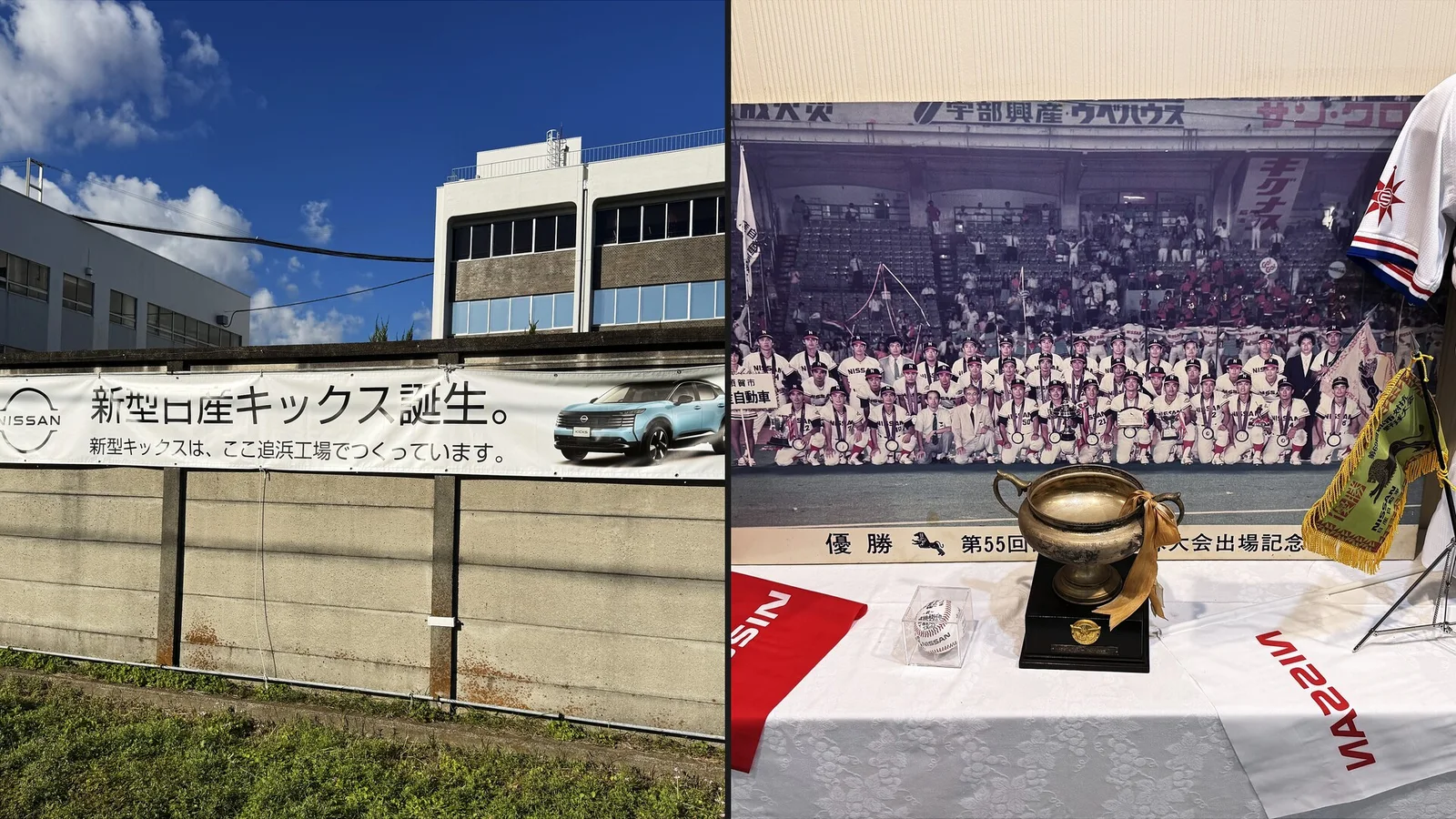
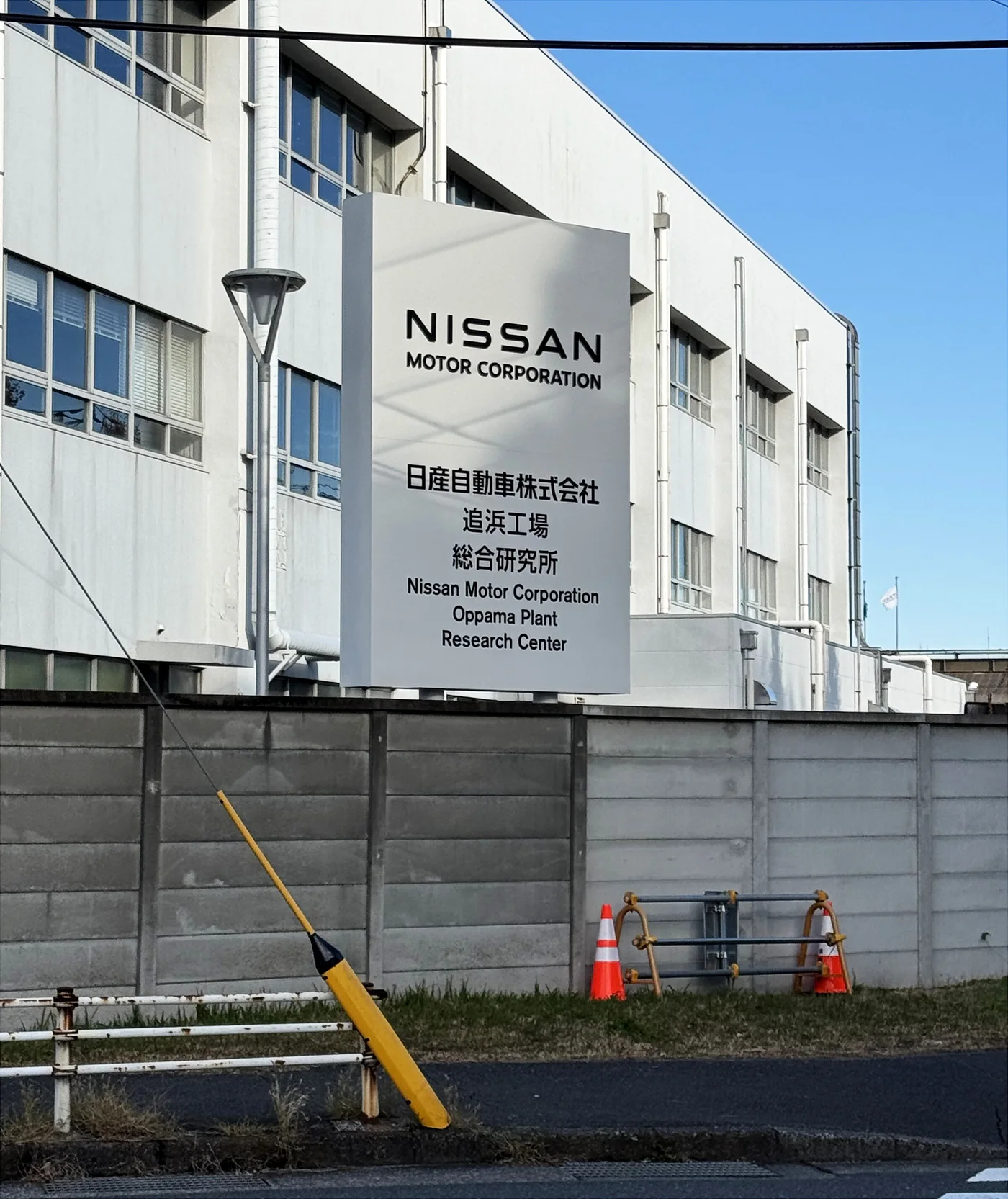
I toured Nissan's Oppama Plant in Yokosuka, Kanagawa, where vehicle assembly is scheduled to end at the close of fiscal 2027[1]. Along the weathered concrete wall outside the gate, a white banner still reads: "The new Kicks is made right here at the Oppama Plant."
A Town That Had Already Quieted Down
Before walking to the gate on a weekday noon, I walked around Oppama Station. Hardly anywhere to eat was open besides McDonald's, and almost everyone I passed on the street was either a high school student or an elderly resident.
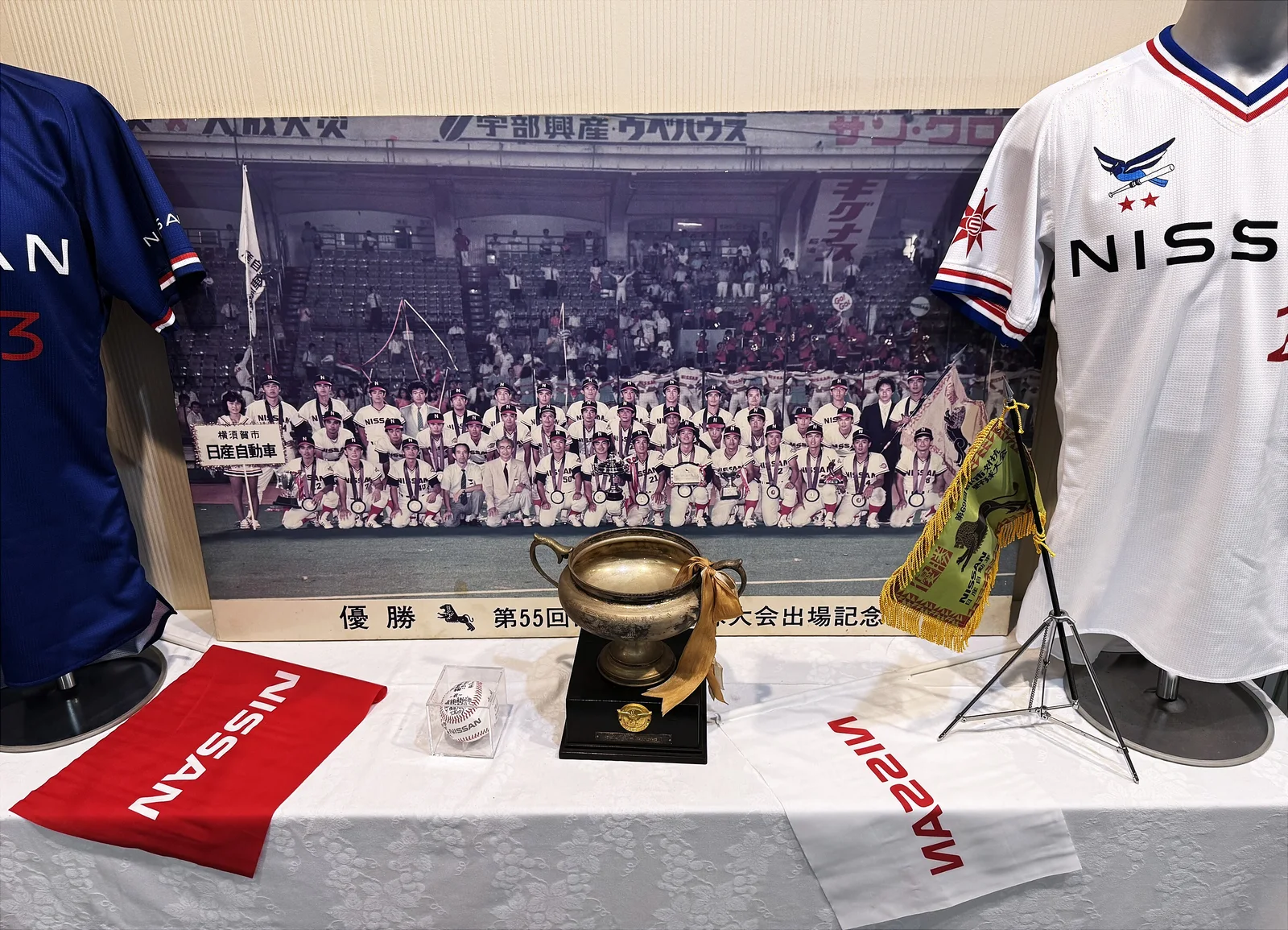
Inside the plant's Guest Hall, a corner display holds memorabilia from Nissan's corporate baseball team—once a powerhouse of Japanese industrial baseball. A framed stadium photo from the 55th Intercity Tournament sits behind #23 uniforms and a tarnished silver championship cup. A thin layer of dust rested on the cup and base.
Built in 1961 as Japan's first full-scale passenger car factory, Oppama was laid out almost like a town of its own: internal roads, mini wind turbines, fountains, and a dedicated wharf on Tokyo Bay where roughly 800 finished cars drive straight onto a car-carrier ship at once.
Judging from the street outside the station and that dusty corner in the Guest Hall, though, the heyday of the company town had ended long before the closure announcement.
Sixty Years of Patches: Four Models on One Line
You might expect the assembly line inside to feel just as faded. It didn't.
Measured strictly by building age and layout, Oppama is visibly old—nothing like a greenfield Tesla Gigafactory designed from scratch around modern automation. Column grids, ceiling clearances, and retrofitted carriers show sixty-five years of constraints.
What surprised me from the walkway was seeing, as far as I could count, around four distinct models—including e-POWER hybrids—completed on a single assembly line.
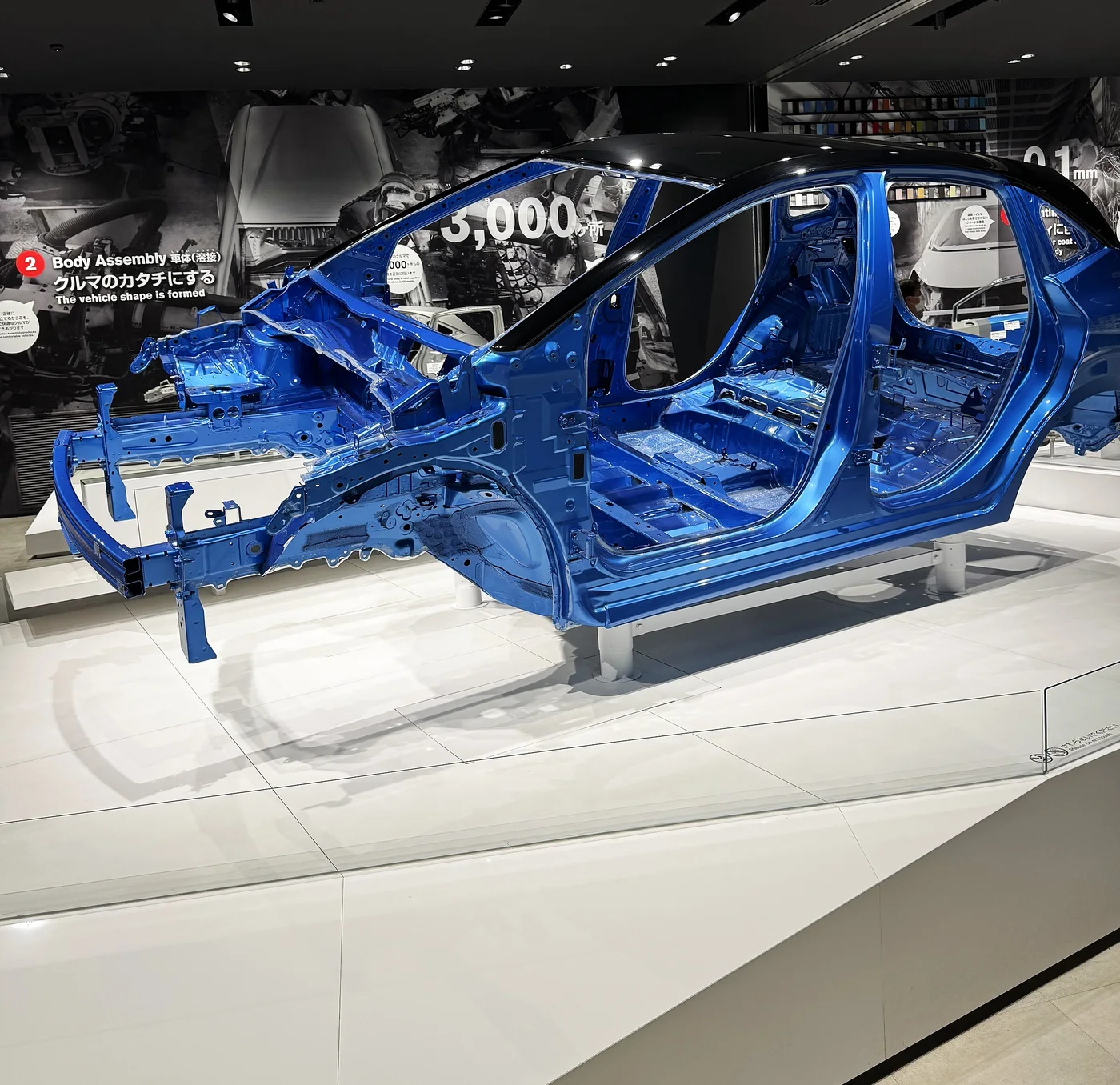
Running one model per line lets you fix parts bins and tooling in place. Running four different cars nose-to-tail down one line means the exact parts kit for each car has to arrive beside it without missing a beat. Humans and AGVs were doing that together.
The history of how those AGVs got there was much messier than robotics demos make automation look:
- Before AGVs: Operators walked 30,000 steps per person per day fetching parts and following bodies.
- Early AGVs (lead-acid era): Walking dropped, but early carts ran on heavy lead-acid batteries. Workers had to spend significant time and coordination rotating and charging batteries together to keep them moving.
- Lithium-ion era: Only after lithium-ion batteries arrived did the charging bottleneck disappear.
Building a greenfield Automated Factory is a feat of capital and clean-sheet design. Keeping a 1961 building competitive by replacing 30,000 daily footsteps with manual lead-acid battery rotations until better chemistry arrived—while threading four models down one line—is a different kind of engineering altogether. What looks "old" from the catwalk is sixty-five years of bottlenecks solved in place.
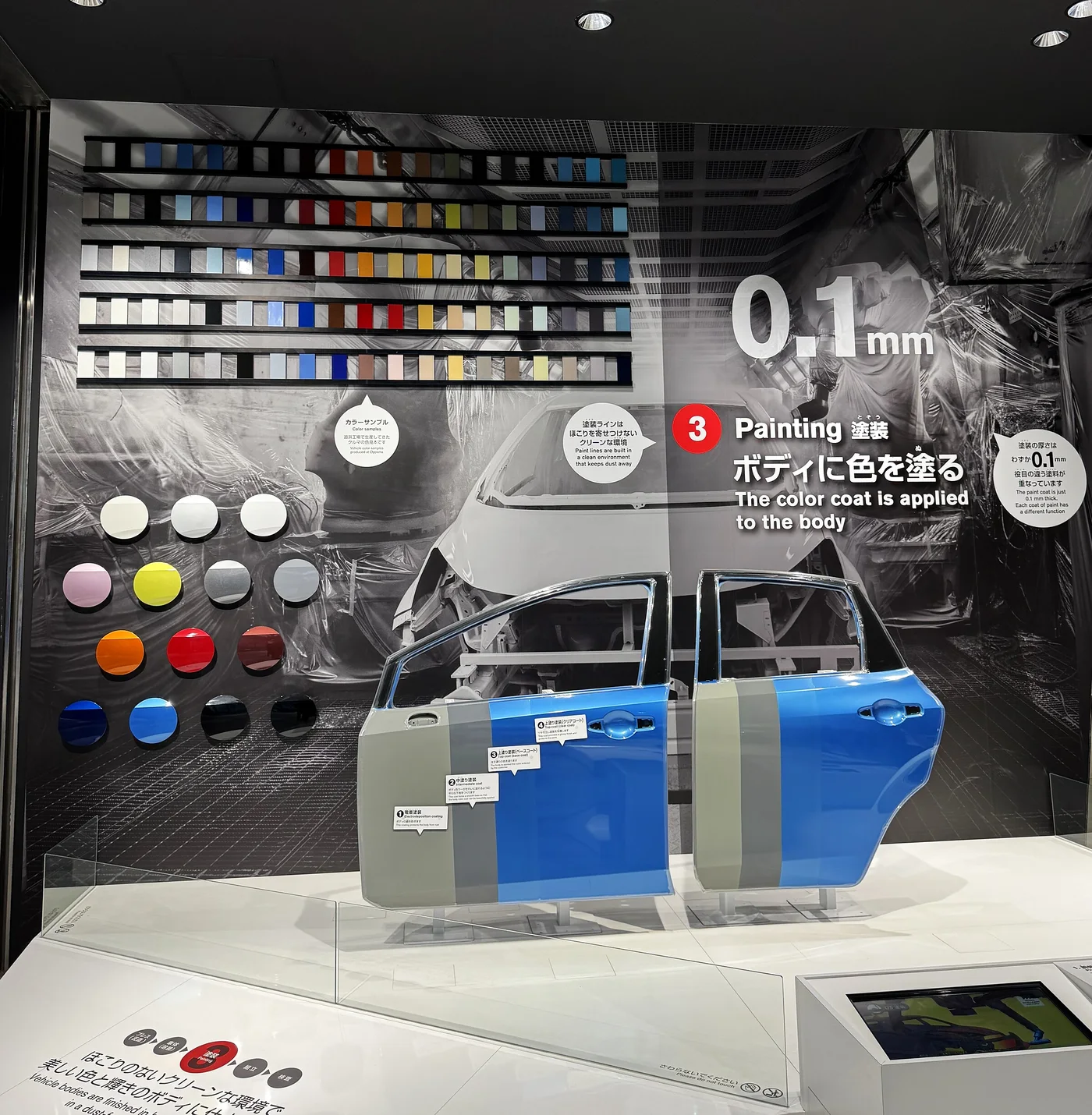
Why Nobody Cut Corners
That contrast led to the part I still think about.
Everyone working inside Oppama knows vehicle production there is ending. In software companies and startups, once a product or office is slated for shutdown, morale and quality usually fray fast; the rational incentive to sweat details evaporates when the future disappears.
On the Oppama line, nobody looked like they were coasting. AGVs arrived on cue, operators hit their marks cleanly within takt time, and the tour staff explained each station with steady precision.
Quality on a line like that doesn't seem to run on growth projections. It runs on pride in one's station and habits worn deep over decades.
On paper, moving production volume to newer plants makes sense; given the age of the buildings, consolidation may well be unavoidable. What can't be moved on a spreadsheet is the mixed-model muscle memory of a 1961 factory town, or the quiet ethic of people who keep doing their job right after they've been told the doors are closing.
Notes
- [1] Photography is prohibited inside the active assembly buildings; all photos here were taken along the plant perimeter and inside the Guest Hall exhibition area. The count of roughly four models on the line reflects direct observation from the tour walkway on the day of the visit.